
The Hidden Barrier to IVF Success: The Critical Role of HVAC Systems
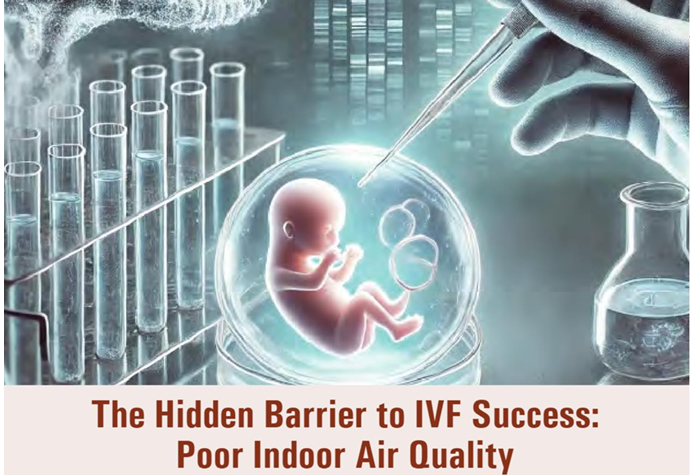
An article titled “The Hidden Barrier to IVF Success” published in the ISHRAE Journal (Jan–Feb 2025) highlights a crucial yet often overlooked aspect of assisted reproductive technology (ART). It brings attention to the growing connection between medical outcomes and environmental engineering.
Over the past decade, IVF clinics have rapidly expanded across urban and semi-urban regions. As infertility rises due to lifestyle, stress, and environmental factors, IVF has become a vital solution—offering hope to thousands of aspiring parents.
However, success in IVF is not driven by medical expertise alone. The article emphasizes the critical role of HVAC system design, execution, and equipment selection in ensuring optimal outcomes. Controlled environments such as IVF labs, procedure rooms, and andrology labs are highly sensitive to air quality.
Beyond temperature and humidity, controlling pollutants like PM, NO₂, SO₂, VOCs, and ozone is essential. These contaminants can negatively impact gamete quality, embryo development, and implantation success.
Inadequate ventilation and poor filtration can allow both outdoor and indoor pollutants to enter these critical spaces, increasing risks. This underlines the need for robust HVAC design, proper execution, and high-performance systems.
Advanced solutions such as HEPA filtration, positive pressure environments, and continuous IAQ monitoring play a vital role in maintaining safe conditions and improving IVF success rates.
Unlike many medical treatments, ART outcomes carry deep emotional significance. Each unsuccessful attempt affects families profoundly, while success brings not just clinical results—but hope, happiness, and relief from societal pressures.
Team Csquare Engineering strongly concurs with the author’s perspective. With over a decade of experience in HVAC design and execution for IVF clinics and critical healthcare environments, we have witnessed first-hand the impact of well-engineered systems in such sensitive spaces.
It is essential for healthcare and engineering communities to work together, recognizing the importance of infrastructure in achieving successful clinical outcomes. Through collaboration, we can contribute to a shared mission—bringing hope and happiness to thousands of families on their journey to parenthood.